
Access Routes Cleared for Infrastructure Work
Utility Clearing in Reidsville for power, telecom, and infrastructure easements requiring vegetation removal
Utility infrastructure requires ongoing access for maintenance crews and equipment, but vegetation along easements and right-of-way corridors regrows quickly in Piedmont climate conditions and blocks routes needed during repair work or system upgrades. Clearing work removes trees, brush, and obstructions from utility corridors to maintain open pathways where crews can reach substations, tower sites, and line infrastructure without delay when service interruptions occur or scheduled maintenance begins. Total Land Management operates heavy excavation equipment to clear utility easements across Reidsville, Greensboro, High Point, and Winston-Salem for energy companies and infrastructure contractors managing power distribution, telecom networks, and fiber installations along the I-85 corridor and throughout Rockingham County.
Clearing operations remove standing trees within easement boundaries that could fall onto lines during storms, cut brush and ground vegetation that restricts equipment access, and maintain soil stability during removal work to prevent erosion that undermines buried conduit or creates drainage problems. Experience with Dominion Energy and large-scale infrastructure projects provides familiarity with utility-specific clearing standards and coordination requirements that differ from residential or commercial land clearing work.
Arrange an easement evaluation to assess vegetation removal requirements for your utility corridor.
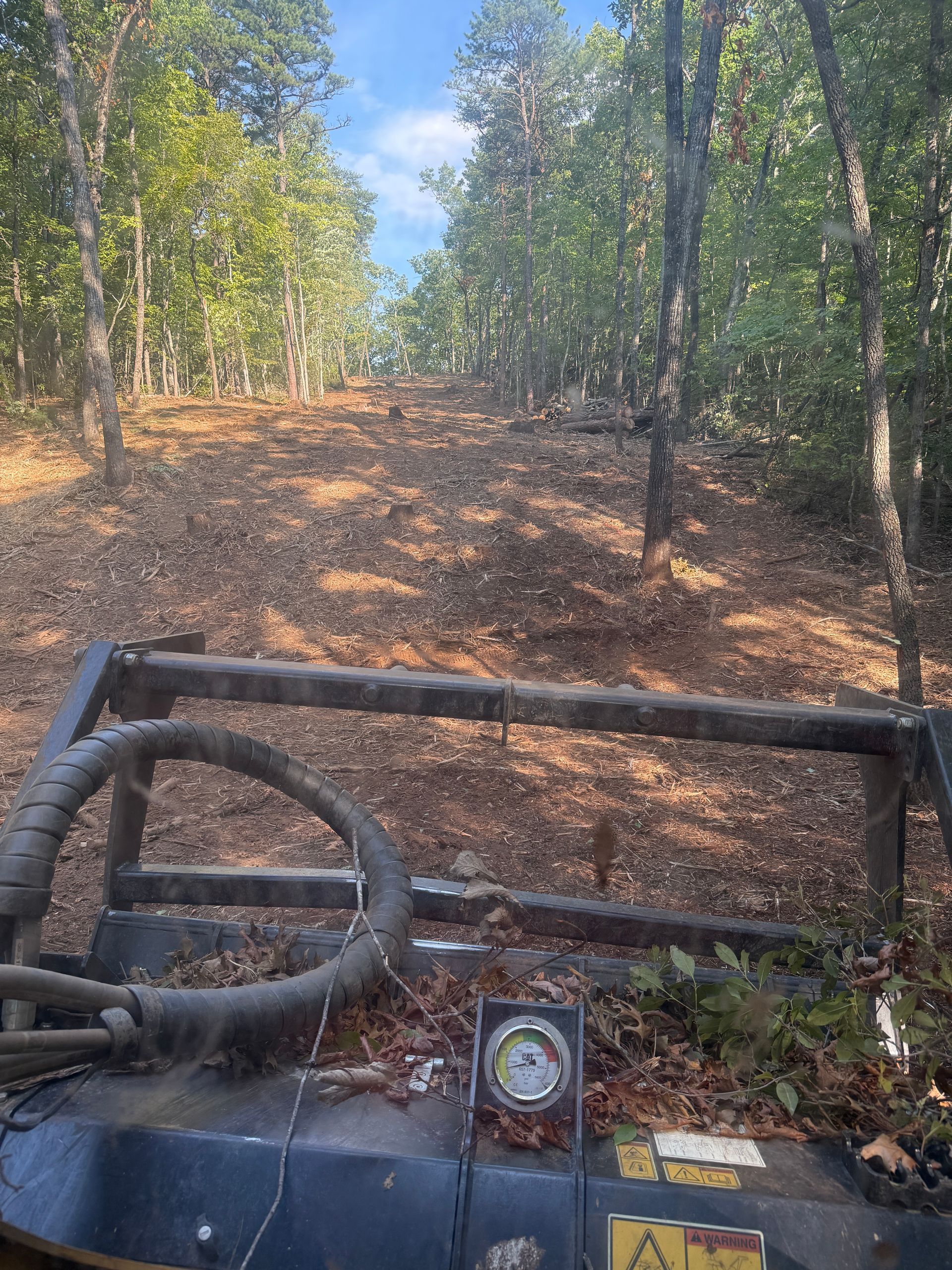
Why Utility Corridors Need Specialized Clearing
Your utility clearing project involves equipment capable of operating within confined easement boundaries without disturbing adjacent property, selective removal that follows utility company specifications for which trees and vegetation must be cut versus what can remain, and coordination with utility operations to avoid service interruptions during active clearing work. Heavy equipment removes material while maintaining access for utility vehicles that may need to pass through the corridor during clearing operations, and removed vegetation is processed on-site or hauled depending on easement width and access conditions.
After clearing is finished, you'll see open corridors with unobstructed ground routes that allow maintenance trucks to reach line infrastructure, tower bases, or substation access points without navigating through overgrown vegetation, and overhead clearance that prevents tree branches from contacting power lines during wind events or ice loading common in North Carolina winters. Soil along the cleared corridor remains stable without erosion channels forming where heavy equipment operated, and drainage patterns continue moving water away from utility infrastructure rather than pooling around buried conduit or equipment foundations.
Utility clearing differs from right-of-way maintenance because it often supports specific project timelines—line upgrades, tower installations, or infrastructure expansions that require cleared access before construction crews mobilize. Work coordinates with engineering firms managing project design and major contractors handling installation phases, and clearing schedules align with utility outage windows or construction start dates to prevent delays.
Questions Before Starting Corridor Work
Utility projects involve access coordination and regulatory requirements that affect how clearing work is scheduled and performed across easement areas.
What equipment is used for utility corridor clearing?
Heavy excavators with brush-cutting attachments and forestry mulchers handle tree and vegetation removal within easements, while skid steers access narrower corridors where larger equipment cannot operate—Total Land Management scales equipment to match corridor width and access conditions without requiring excessive easement disturbance.
How does soil stability get maintained during clearing?
Equipment operators avoid working in saturated conditions where tracks or tires create deep ruts that later channel stormwater and cause erosion, and clearing work is sequenced to leave stabilizing vegetation along corridor edges until interior work is complete—this prevents bare soil from washing into drainage channels before final grading establishes positive water flow.
Why do utility companies specify which trees must be removed?
Clearing standards focus on vegetation tall enough to contact overhead conductors if it falls, species with aggressive root systems that could damage buried infrastructure, and growth within minimum clearance zones required by electrical safety codes—not all vegetation within an easement needs removal, and selective clearing reduces project costs while meeting operational requirements.
When should utility clearing happen relative to line upgrade schedules?
Vegetation removal typically occurs four to six weeks before construction crews begin infrastructure work in Reidsville and Rockingham County, allowing cleared corridors to stabilize and utility companies to verify that access routes meet project specifications before equipment and materials are delivered to work sites.
What coordination happens with utility operations during clearing?
Work schedules align with utility outage windows when power can be safely de-energized if clearing occurs near live conductors, and communication protocols are established so utility dispatch knows when crews are working along active infrastructure—Total Land Management follows utility-specific safety procedures developed through ongoing contractor relationships with energy companies.
Total Land Management manages utility clearing projects from small easement sections to commercial-scale corridor work, operating equipment capable of handling jobs across residential acreage to infrastructure development sites. Request a consultation to review your utility clearing scope and access coordination needs.