
Corridors Maintained for Ongoing Utility Access
Right-of-Way Clearing in Reidsville for utility corridors and infrastructure routes requiring vegetation management
Dense Piedmont vegetation regrows quickly along utility easements and infrastructure corridors, and unmanaged growth interferes with power line maintenance, restricts equipment access during repairs, and increases fire risk when branches contact electrical conductors. Right-of-way clearing removes trees, brush, and ground cover from defined easement boundaries to maintain open corridors where utility crews can work safely and equipment can travel without obstruction. Total Land Management manages corridor clearing across Reidsville, Rockingham County, and the I-85 corridor for utility companies and infrastructure contractors who need vegetation controlled along power transmission routes, telecom pathways, and access roads serving substations and tower sites.
Clearing work removes standing trees within easement boundaries that could fall onto utility lines during storms, cuts brush and understory growth that restricts ground access for maintenance vehicles, and manages vegetation along corridor edges to prevent regrowth from encroaching into cleared zones. Work follows specifications provided by utility companies that define clearing widths, tree removal limits, and vegetation control standards required to meet regulatory safety requirements and maintain operational access throughout all seasons.
Request a corridor assessment to identify vegetation removal needs along your utility right-of-way.
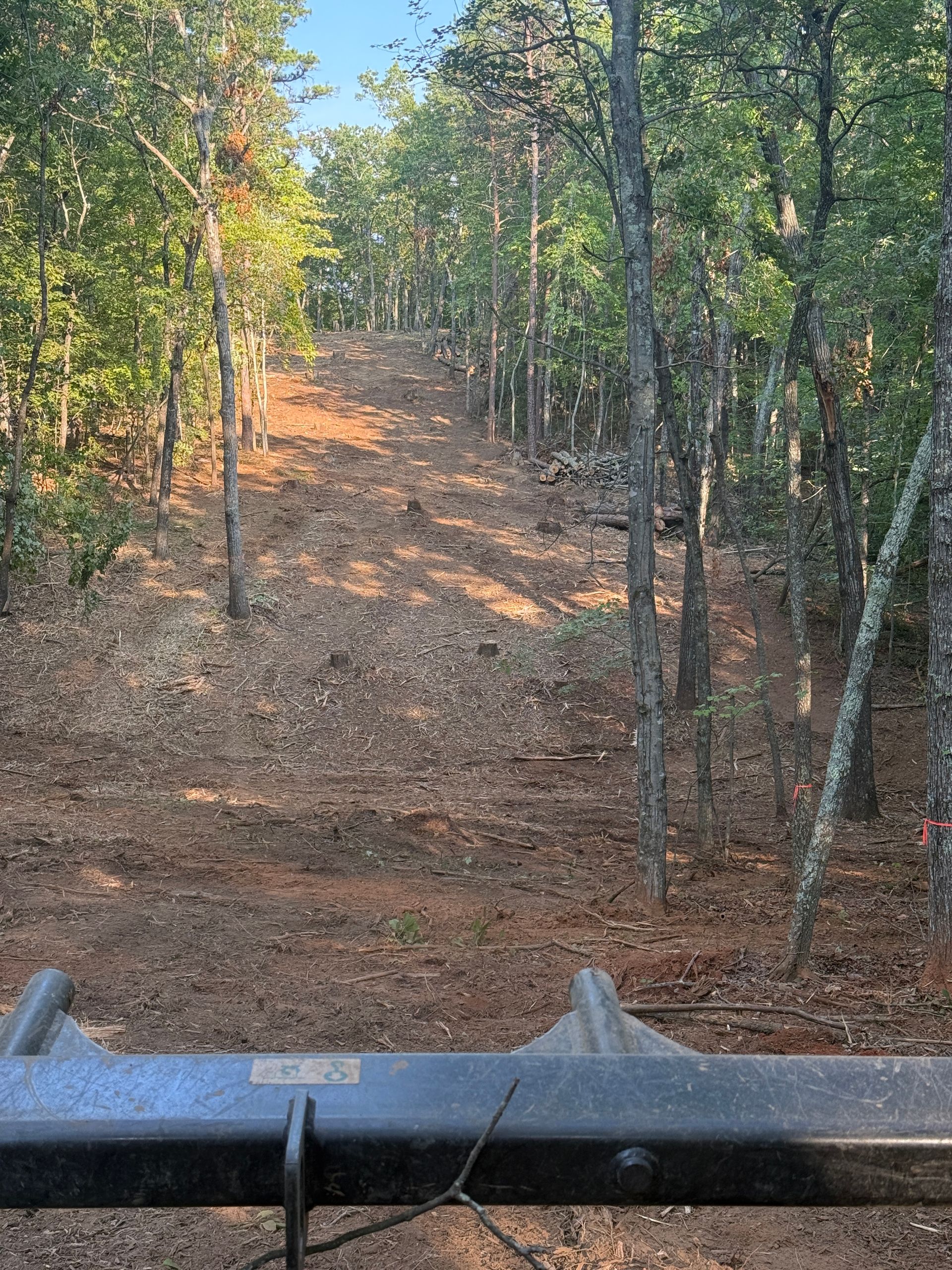
What Proper ROW Clearing Accomplishes
Your corridor clearing begins with tree removal along easement boundaries, focusing on species tall enough to contact overhead lines if they fall and vegetation with root systems that could undermine buried conduit or fiber pathways. Heavy equipment accesses corridors from existing utility roads or temporary routes positioned to minimize soil disturbance outside cleared zones, and removed material is either chipped for erosion control or hauled off-site depending on project specifications and available space within the easement.
Once clearing is complete, you'll notice open corridors with unobstructed sight lines along utility routes, ground conditions that allow maintenance trucks and equipment trailers to travel without getting stuck in overgrown vegetation, and reduced fire risk where tree branches no longer hang near power lines or create ignition hazards during dry conditions. The cleared easement maintains defined boundaries that prevent encroachment from adjacent property vegetation, and regrowth is controlled through follow-up management contracts or herbicide application depending on utility company standards.
Right-of-way work coordinates with utility maintenance schedules and regulatory inspection timelines—corridors are often cleared before planned line upgrades, after storm damage events, or during routine vegetation management cycles specified in utility operating permits. Clearing standards vary based on corridor purpose, with transmission line easements requiring wider clearing zones than telecom or fiber pathways.
Common Questions About ROW Services
Utility corridor projects involve regulatory requirements and access coordination that affect how vegetation management is performed and scheduled.
How wide are typical right-of-way clearing zones?
Clearing width depends on utility type and voltage rating—transmission line corridors often require 75 to 150 feet of cleared easement to prevent tall trees from contacting conductors, while telecom and fiber pathways may need only 20 to 30 feet of maintained clearance for equipment access.
What happens to removed vegetation and debris?
Material is either chipped on-site and spread for erosion control within the easement or hauled to disposal facilities if utility specifications prohibit leaving organic material in the corridor—Total Land Management coordinates disposal methods with project managers based on contract requirements and site access conditions.
Why does Piedmont vegetation require ongoing corridor maintenance?
Oak, pine, and hardwood species common in Reidsville and Greensboro grow rapidly in full sunlight created along cleared easements, and vines like kudzu and wisteria colonize disturbed ground quickly—corridors typically need re-clearing every three to five years to prevent regrowth from reaching heights that interfere with utility operations.
When should ROW clearing happen relative to utility upgrade work?
Vegetation removal is scheduled before equipment installation or line upgrade projects begin so construction crews have clear access and staging areas without delays caused by tree removal during active utility work—clearing typically occurs four to eight weeks ahead of major infrastructure projects.
How does corridor clearing differ from standard land clearing?
ROW work follows narrower easement boundaries and must avoid disturbing adjacent property outside utility control, uses equipment sized to operate within confined corridors rather than open sites, and coordinates with utility operations to maintain power service and avoid outages during clearing activities.
Total Land Management clears utility corridors and infrastructure easements across the Triads region, working with energy companies and major contractors who require vegetation management along transmission routes and access pathways. Schedule an evaluation to review clearing scope and vegetation control needs for your right-of-way project.