Routes That Support Equipment Movement
Site Access Clearing in Reidsville for properties requiring long-distance access corridors and equipment staging areas
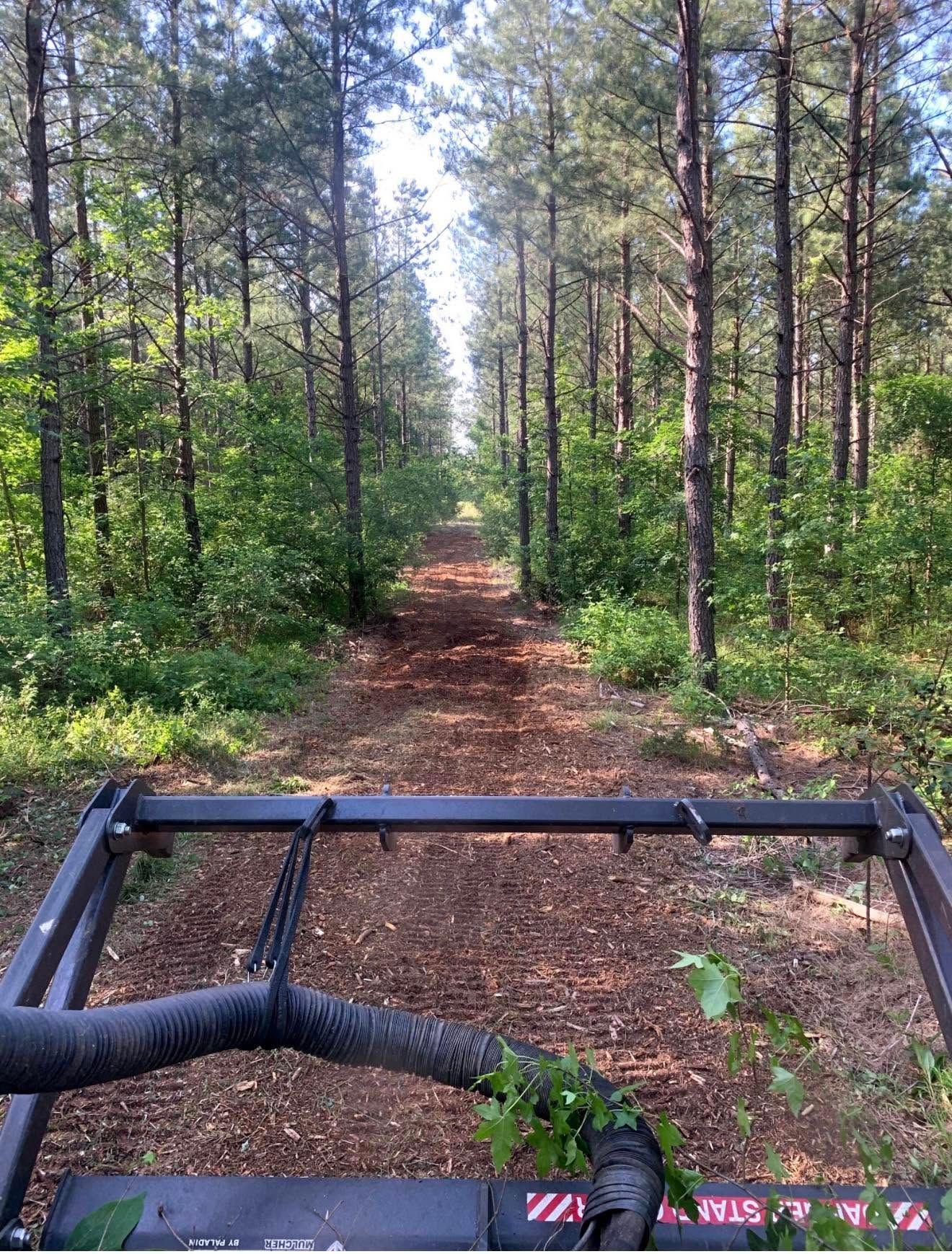
Properties across Rockingham County and the I-85 corridor often extend far from existing roadways, requiring cleared access routes before construction, forestry, or utility work can proceed. Total Land Management clears and prepares access roads and corridors using excavators to remove trees and brush along planned routes, grade surfaces for heavy machinery, and haul logs from distant work zones back to staging areas. Multi-acre sites with complex terrain demand strategic access planning to avoid equipment bottlenecks and unnecessary rework once development begins.
The process involves removing vegetation along the access corridor, grubbing roots that would obstruct vehicle passage, and establishing a graded path wide enough for loaded trucks and tracked equipment. Piedmont terrain often includes slopes, creek crossings, and dense hardwood stands that require careful corridor routing to maintain stable ground conditions throughout the project.
Schedule a site walkthrough to identify access requirements, equipment constraints, and optimal corridor routing for your property layout.
Why Strategic Access Corridors Work for Complex Sites
Excavators clear trees and brush along predetermined routes, creating corridors wide enough for equipment booms, material deliveries, and vehicle turnarounds. Long-distance access roads require grading to prevent rutting and washouts, particularly in areas where red clay soils become impassable during wet conditions. The field operator manages corridor clearing on active multi-acre projects, coordinating equipment staging and material hauling along access routes that connect work zones to public roads or existing site infrastructure.
Once access clearing completes, equipment and personnel can reach all areas of the property without driving through uncleared vegetation or creating unplanned paths that damage soil structure. Contractors and utility crews work more efficiently because materials and machinery move along defined routes rather than navigating obstacles or waiting for additional clearing. Properties that begin work without proper access corridors often experience delays when delivery trucks cannot reach work zones or when equipment becomes stuck in unimproved terrain.
Access corridor projects typically include log hauling from clearing zones back to staging areas near public roads, preventing accumulation of material deep within the property where disposal becomes logistically difficult. The cleared corridors remain usable throughout the project and often serve as permanent access roads after development completes.
Common Questions About This Service
Property owners and contractors working on large sites frequently ask about corridor width, grading requirements, and how access clearing integrates with broader project timelines.
How wide should site access corridors be cleared?
Width depends on equipment type and vehicle traffic, but most corridors range from twelve to twenty feet to accommodate loaded trucks, excavators, and turnaround zones without vegetation contact.
What grading is included with access clearing?
Basic grading removes high spots and fills low areas to establish a stable surface; more extensive grading for drainage or slope management is typically coordinated separately based on site conditions.
How does access clearing affect overall project timelines?
Proper access allows all subsequent work phases to proceed without delays caused by equipment mobility issues; clearing access routes first prevents bottlenecks during later construction or utility installation.
Why do Piedmont properties require specialized access preparation?
Red clay soils throughout the region lose stability when wet, turning unimproved paths into impassable mud; cleared and graded access corridors maintain usability during weather events that would otherwise halt work.
What happens to logs and debris removed from access corridors?
Logs are hauled along the cleared corridor to staging areas near existing roads, where they can be processed or removed; hauling material during clearing prevents accumulation in work zones and maintains site organization.
Total Land Management operates throughout the I-85 corridor and Piedmont region, managing access clearing on properties where long-distance routes and equipment staging are critical to project success. Provide property maps and access point locations to receive a corridor assessment and routing plan.