Pathways That Stay Clear for Access and Compliance
Easement Clearing in Reidsville for property access, utility corridors, and right-of-way maintenance preventing overgrowth
Easements overgrown with brush, saplings, and dense vegetation block legal access for utility maintenance, property management, and infrastructure work. Total Land Management clears easements across residential and commercial properties in Reidsville and Rockingham County, removing trees and undergrowth from corridors designated for utility lines, pipeline access, or property right-of-way. The Piedmont region's growing season produces rapid overgrowth that can close off easement pathways within a single season if not maintained.
Easement clearing removes all vegetation within the designated corridor using forestry mulching equipment that grinds trees, brush, and stumps into mulch that decomposes naturally and stabilizes soil. The process maintains the legal width of the easement while protecting adjacent areas from disturbance, keeping pathways open for utility crews, equipment access, or property line verification. In areas where utility companies or pipeline operators require regular access, clearing prevents service delays and ensures compliance with easement agreements.
Request a corridor assessment to determine vegetation density and establish clearing boundaries for your easement.
How Easement Clearing Addresses Overgrowth
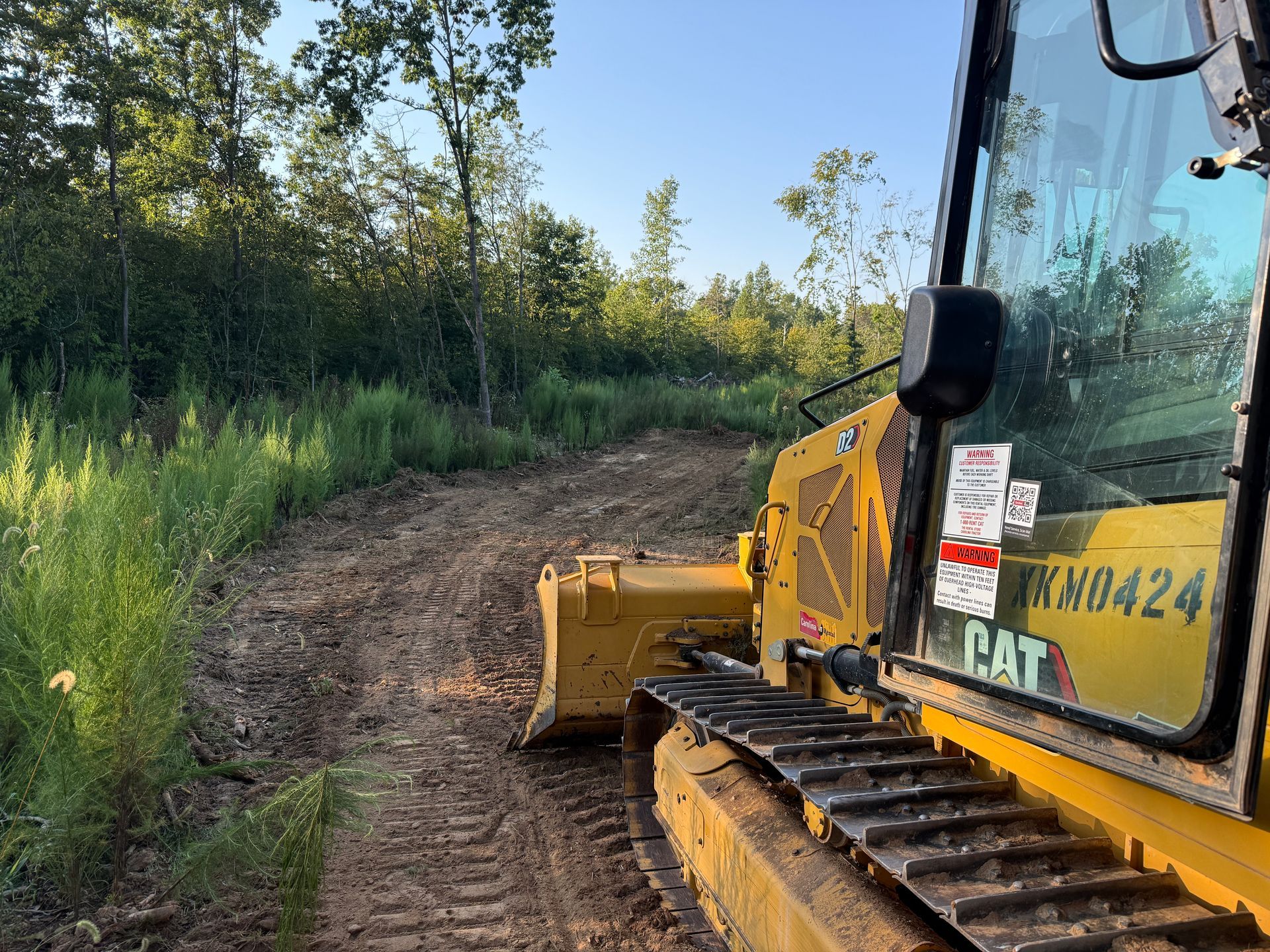
Clearing an easement starts with identifying the exact boundaries from survey markers, property records, or utility maps to avoid encroaching on adjacent land. Forestry mulching equipment then processes vegetation within the corridor, grinding material down to ground level and leaving a layer of mulch that suppresses regrowth while preventing erosion. Trees, saplings, and dense undergrowth are removed in a single pass, and the mulch layer settles into a stable ground cover that holds soil in place on sloped terrain.
After clearing is finished, you see an open corridor with defined boundaries and no obstructions blocking access. Utility vehicles or maintenance crews can enter the easement without cutting through brush or maneuvering around trees, and the pathway remains visible for future access. The mulch layer breaks down over time, enriching the soil while slowing the regrowth of woody vegetation that would otherwise close off the corridor within months.
Easement clearing doesn't include ongoing maintenance contracts or chemical treatments for vegetation control, but the mulch layer does extend the time before regrowth becomes dense enough to block access again. Properties with power line easements, pipeline corridors, or shared access routes benefit from periodic clearing to maintain compliance with utility agreements and prevent disputes over blocked pathways.
Answers to Frequent Service Questions
Property owners often ask how easement clearing affects existing vegetation, how wide the corridor needs to be, and what happens to the material that's removed.
What determines the width of an easement that needs clearing?
The width is established by the legal easement document recorded with the property deed, which specifies the exact corridor reserved for utility access, right-of-way, or shared property use. Clearing must stay within those boundaries to avoid encroaching on land outside the easement.
How does forestry mulching equipment work for easement clearing in Reidsville?
Forestry mulchers use a rotating drum with carbide teeth to grind trees, brush, and stumps into small wood chips that settle as ground cover. The process clears vegetation in one pass without requiring separate removal of debris, and the mulch layer stabilizes soil and slows regrowth.
What happens to trees or stumps inside the easement corridor?
Trees and stumps within the easement boundaries are ground down to ground level using mulching equipment, eliminating obstructions that would block equipment access or interfere with utility work. The processed material becomes part of the mulch layer rather than being hauled off-site.
When should easement clearing be scheduled to prevent overgrowth?
Clearing is most effective before vegetation reaches maturity in late spring or summer, but it can be performed year-round as long as ground conditions allow equipment access. Properties in the Piedmont region often need clearing every three to five years depending on regrowth rates and easement usage.
What's the difference between clearing an easement for utilities versus property access?
Utility easements typically require wider corridors and complete vegetation removal to meet safety and access standards for power lines or pipelines, while property access easements may allow selective clearing that maintains some screening vegetation outside the primary pathway. The easement document defines what's required.
Total Land Management works with property owners, engineering firms, and infrastructure contractors on easement clearing projects across the Greensboro metro area. Contact us to review your easement documentation and evaluate corridor conditions.