Ground Ready for Array Installation
Solar Farm Site Preparation in Reidsville for renewable energy projects requiring clearing, grading, and pile-driving installation
Renewable energy growth throughout the Piedmont region has increased demand for contractors capable of preparing large sites for solar panel arrays, including vegetation removal, grubbing, and pile-driving installation for mounting structures. Total Land Management prepares solar farm sites across the Greensboro and Winston-Salem metro areas, clearing land and performing pile driving for commercial-scale installations. The company coordinates with major contractors and engineering firms, handling projects that require both site clearing and specialized solar installation equipment.
Solar site preparation involves clearing vegetation across the entire array footprint, grubbing earth to remove root systems that would interfere with panel placement, and driving piles to support mounting racks. Piedmont geography and soil conditions affect pile depth and spacing, requiring equipment capable of adjusting to site-specific engineering specifications.
Request a project consultation to review site layout, pile-driving specifications, and coordination with your solar installation timeline.
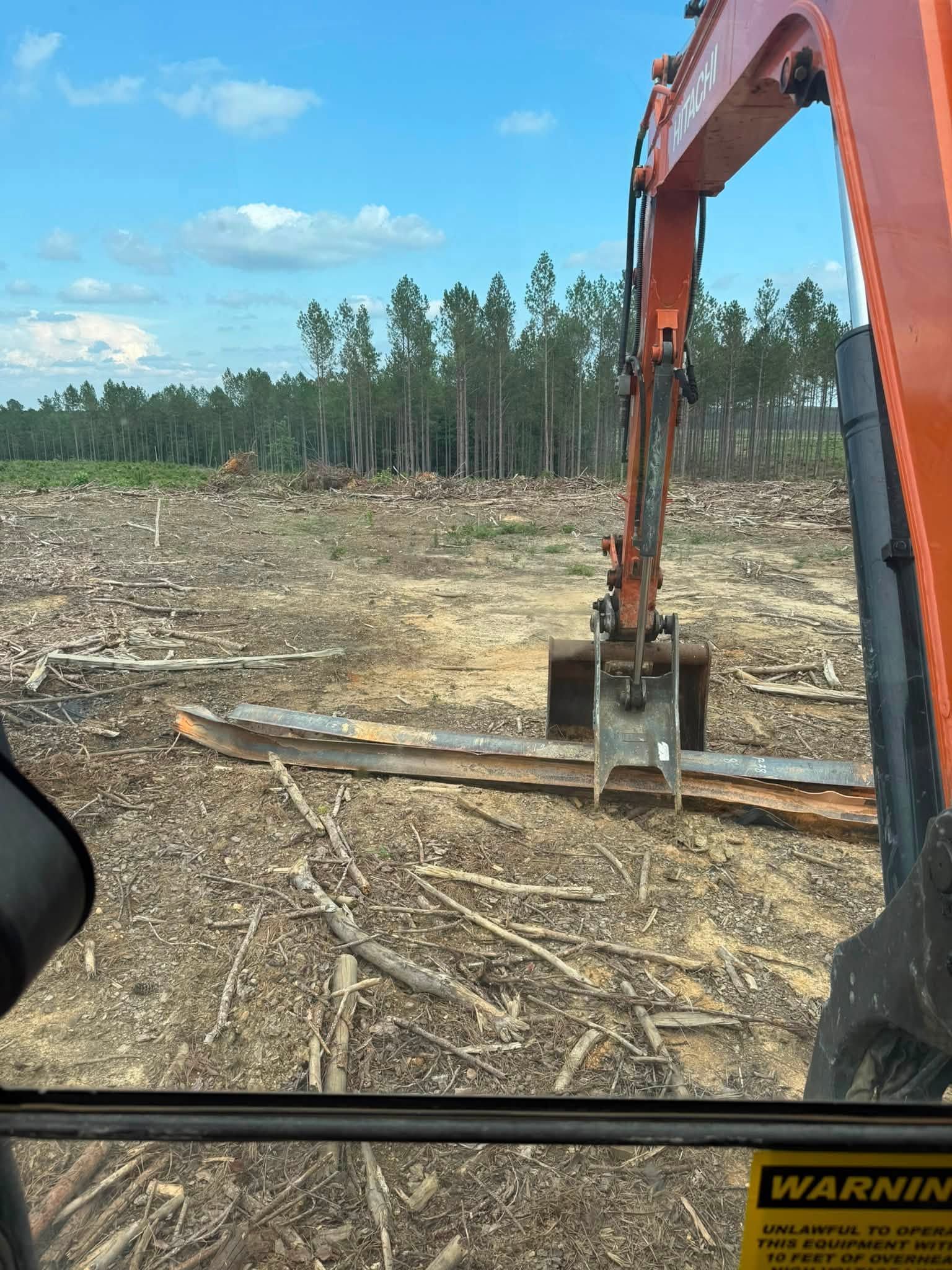
What Proper Solar Site Preparation Requires
Clearing removes all vegetation from the array footprint, creating a level surface free of obstructions that would interfere with panel rows or maintenance access. Grubbing removes root systems and organic material that could decompose and cause settling beneath mounting structures. Pile-driving equipment installs support posts to engineering-specified depths and spacing, establishing the framework for panel racks and electrical infrastructure. Solar projects near the I-85 corridor often involve coordinating clearing and pile installation with utility trenching and panel delivery schedules to keep multiple contractors working efficiently.
After site preparation completes, the property shows cleared access routes, installed pile rows at precise spacing intervals, and graded surfaces that prevent water pooling beneath panel arrays. Solar installation teams can begin mounting racks and wiring panels without delays caused by vegetation management or ground instability. Sites that proceed without proper grubbing and pile installation often experience settling issues or access problems once panels are operational and maintenance crews need to reach equipment.
Total Land Management handles both the clearing and pile-driving phases, reducing the need for property owners and general contractors to coordinate multiple specialty subcontractors. The company works within major contractor networks, managing commercial-scale renewable energy sites alongside other large industrial and infrastructure projects.
Questions Before Starting Your Project
Engineering teams and project managers typically ask about equipment capabilities, site conditions, and how preparation phases align with overall solar installation schedules.
What equipment is used for solar farm site preparation?
Heavy excavators handle clearing and grubbing, while specialized pile-driving equipment installs mounting posts to engineering specifications; both machines operate on-site to minimize mobilization delays.
How deep are piles driven for solar mounting structures?
Depth depends on soil conditions and engineering requirements, but piles typically extend several feet below grade to support panel racks and withstand wind loads; Piedmont red clay soils often require specific driving techniques to achieve specified depths without refusal.
What site conditions affect solar farm preparation costs?
Acreage, existing vegetation density, soil composition, pile count and spacing, and access distance from existing roads all influence project pricing; larger array footprints benefit from economies of scale during clearing and pile installation.
How does solar site preparation coordinate with panel installation timelines?
Clearing and pile driving must finish before rack mounting begins, typically allowing a buffer period for surveying and utility trenching; coordinated scheduling prevents gaps that would delay electrical contractors and panel delivery.
Why does Piedmont geography matter for solar farm development?
The region's renewable energy growth and suitable terrain create demand for large-scale solar projects, but red clay soils and hardwood forests require experienced contractors capable of managing both clearing and specialized installation work.
Total Land Management operates across the Triads and manages solar farm projects requiring coordinated clearing, grading, and pile-driving services. Submit engineering plans and project specifications to receive a detailed preparation proposal aligned with your installation schedule.