Sites Prepared for Equipment and Development
Commercial Land Clearing in Reidsville for industrial projects requiring grading and heavy equipment access
Commercial sites across the Triads require tree removal, grubbing, and access corridor preparation before engineering and construction teams can mobilize equipment. Total Land Management clears multi-acre industrial and commercial properties throughout Reidsville, High Point, and the I-85 corridor, working with major contractors and engineering firms on projects ranging from small acreage development to large-scale site preparation. The company operates a fleet of heavy excavation and forestry equipment capable of handling jobs from eight thousand dollars for smaller parcels to significantly larger commercial developments requiring coordinated phasing.
The clearing process involves tree drop, stump grubbing, and vegetation removal to establish level staging areas and access routes for construction machinery. Piedmont terrain and industrial growth patterns throughout the Greensboro and Winston-Salem metro areas drive demand for contractors who can manage large sites efficiently while coordinating with multiple trades and project timelines.
Arrange an on-site consultation to review project scope, equipment access requirements, and timeline coordination with your engineering team.
What Proper Site Preparation Requires
Heavy excavators remove standing timber and grub root systems to create stable surfaces for equipment staging, material storage, and foundation work. Access roads must be cleared wide enough for concrete trucks, cranes, and delivery vehicles, with sufficient overhead clearance for utility lines and equipment booms. Sites near the I-85 corridor often involve clearing long-distance access routes from existing roadways to development zones, which requires strategic corridor planning to avoid rework once construction begins.
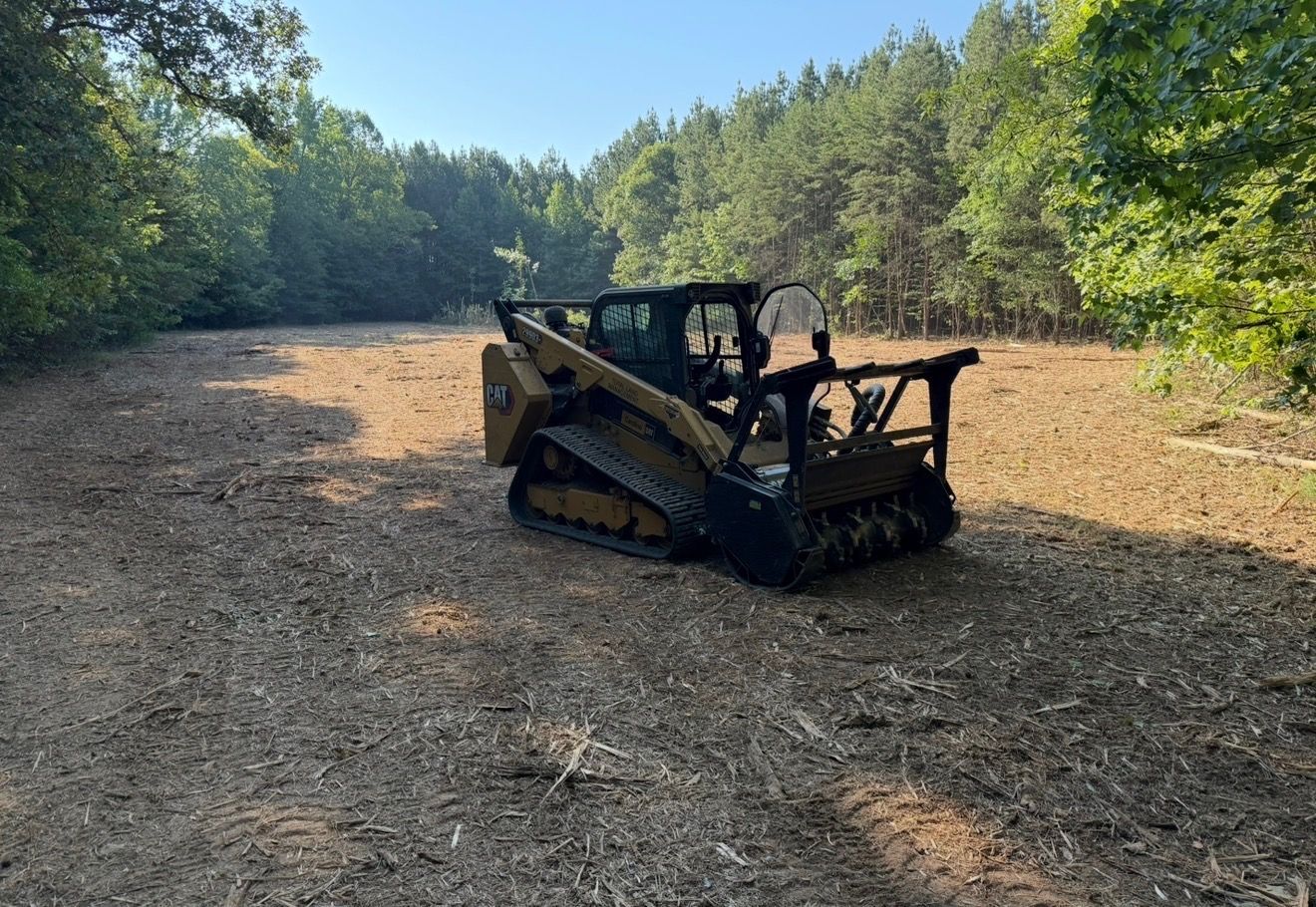
Once clearing completes, the property shows defined access corridors, leveled work areas free of root obstructions, and staging zones capable of supporting loaded equipment without rutting or shifting. Contractors and engineering teams can begin surveying, grading, and utility installation immediately without waiting for additional vegetation management. Projects that proceed without proper grubbing typically encounter delays when equipment strikes buried root masses or when uncleared areas interfere with drainage design.
The five-person team at Total Land Management manages coordination with energy companies, construction firms, and municipal contractors, handling everything from initial clearing to log hauling and debris management. Larger commercial jobs involve phased clearing that aligns with construction schedules, allowing portions of the site to remain untouched until later development stages.
Answers to Frequent Service Questions
Engineering firms and contractors typically ask about equipment capabilities, project timelines, and how clearing integrates with broader site development plans.
What equipment is used for commercial land clearing?
Heavy excavators with specialized attachments handle tree removal, grubbing, and material processing; the equipment fleet includes machines capable of managing multi-acre projects and long-distance access corridor work.
How does clearing coordinate with grading and utility installation?
Clearing establishes the initial site layout and removes obstructions; grading contractors and utility crews can then work without vegetation interference or root system complications.
What factors affect commercial clearing costs?
Acreage, tree density, root system complexity, access distance from existing roads, and disposal requirements all influence project pricing; jobs start at approximately eight thousand dollars for smaller commercial parcels.
Why does Piedmont terrain require specialized clearing approaches?
Red clay soils and dense hardwood forests throughout the region demand equipment capable of both surface clearing and deep root removal to prevent regrowth and ensure stable ground for construction loads.
How long does a typical commercial clearing project take?
Timeline depends on acreage and site conditions, but multi-acre projects coordinated with construction schedules often involve phased clearing that aligns with development milestones rather than single-phase completion.
Total Land Management works across the Greensboro, Winston-Salem, and High Point metro areas, managing commercial projects for major contractors and energy firms. Submit project details and site plans to receive a detailed scope assessment and timeline estimate.