Infrastructure Sites Ready for High-Precision Tech Builds
Data Center Site Preparation in Reidsville for technology infrastructure projects requiring large-scale clearing and grading precision
Industrial corridor expansion across the Piedmont region creates demand for sites capable of supporting data center construction, and Total Land Management prepares these locations throughout Reidsville and the I-85 corridor with equipment-intensive clearing, rough grading, and utility corridor coordination. Technology infrastructure requires more than basic dirt work—sites must meet engineering specifications for drainage patterns, load-bearing capacity, and access routing before vertical construction begins. The preparation process establishes foundation conditions that determine whether a data center can operate reliably for decades or face ongoing maintenance issues caused by inadequate site preparation.
This service handles large-scale clearing to remove existing vegetation and structures, performs rough grading to establish elevation benchmarks and drainage flow, prepares access routes for construction traffic, and coordinates utility corridors with engineering firms managing power, fiber, and water infrastructure. Sites in Greensboro, High Point, Winston-Salem, and along the I-85 corridor face different soil compositions and topography challenges that affect how grading work must be sequenced to prevent erosion during the construction phase.
Schedule a site evaluation to review clearing requirements and grading specifications for your data center project.
What Precision Site Preparation Requires
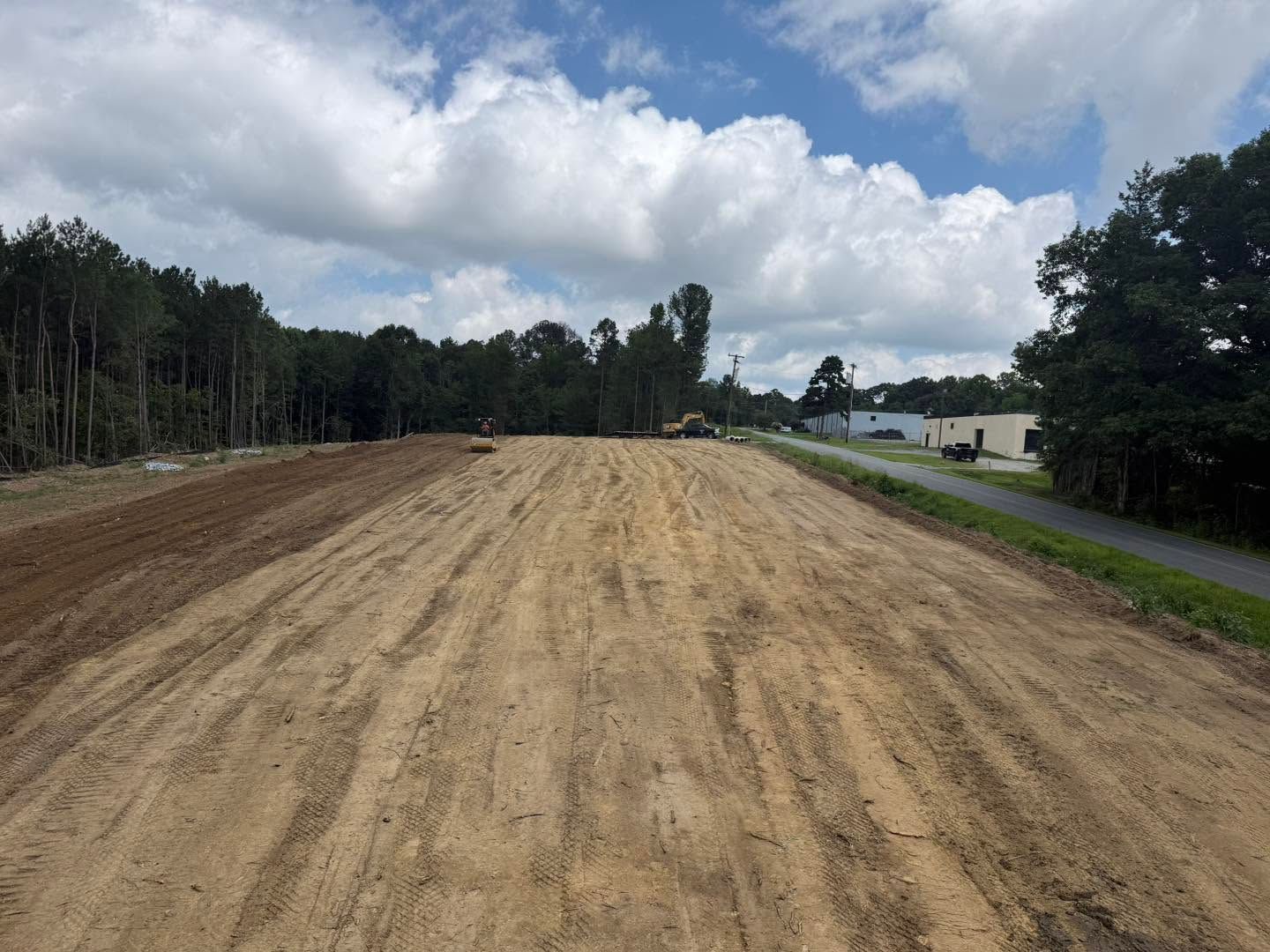
Your site preparation begins with vegetation and obstruction removal across the entire footprint, followed by rough grading that moves earth to match engineering drawings specifying elevations, slopes, and drainage direction. Heavy excavation equipment cuts high areas and fills low spots to create level pads where data center buildings will sit, while perimeter grading directs stormwater away from structures and toward retention areas.
Once rough grading establishes the primary elevations and drainage patterns, you'll notice the site has defined access routes for construction vehicles, staging areas where equipment and materials can be positioned without interfering with building footprints, and utility corridors cleared to grade specifications that allow trenching crews to install conduit and piping at proper depths. The entire prepared area shows consistent slope angles that prevent water from pooling near foundation zones, and soil compaction across high-traffic areas supports the weight of loaded concrete trucks and cranes without rutting.
Preparation work coordinates with engineering firms that provide survey data and grade plans, and with utility contractors who need access corridors positioned to match their installation schedules. Sites prepared for data centers differ from standard commercial development because electrical service, fiber pathways, and cooling infrastructure require redundant routing—your site must accommodate multiple utility entry points rather than single-feed connections typical of office or retail construction.
What Site Owners Need to Know
Data center projects involve coordination across multiple contractors and engineering disciplines, and site preparation establishes the timeline foundation for all subsequent work.
What happens before clearing begins?
Survey crews mark boundaries, wetland delineations are verified if applicable, and engineering plans are reviewed to confirm grade elevations and utility corridor locations match site conditions and avoid conflicts with existing infrastructure.
How does Piedmont topography affect the grading process?
Red clay soils across the Reidsville area and I-85 corridor require specific moisture management during earthwork—grading schedules adjust based on recent rainfall to prevent equipment from creating compaction issues that later interfere with drainage performance or foundation stability.
What access and staging areas are included?
Preparation work establishes routes wide enough for construction delivery trucks and concrete mixers, plus staging zones positioned outside building footprints where contractors can store materials and park equipment without interfering with ongoing site work or utility installation.
Why does rough grading come before utility trenching?
Establishing final elevations and drainage slopes first allows utility contractors to install conduit and piping at depths that match finished grade—trenching before rough grading is complete often requires rework when subsequent earthmoving changes elevations around utility routes.
How do engineering firms coordinate with clearing and grading work?
Site preparation follows grade plans and survey benchmarks provided by civil engineers who calculate drainage flow, slope angles, and cut-fill volumes—Total Land Management works directly with these firms to meet precision requirements and adjust fieldwork when subsurface conditions differ from initial site assessments.
Total Land Management manages site preparation for technology infrastructure projects across the Triads region, handling the clearing and grading coordination that major industrial contractors and engineering firms require for data center construction timelines. Request an on-site consultation to review your project's clearing scope and grading specifications.