Roads Built for Heavy Equipment and Long-Term Use
Access Road Construction in Reidsville for commercial sites, solar farms, and industrial projects requiring durable equipment pathways
When commercial or industrial projects require routes for heavy machinery, material hauling, and equipment staging, the road base must handle substantial weight and repeated traffic without degrading. Total Land Management builds temporary and permanent access roads in Reidsville and across the Piedmont region, using graded and compacted construction methods designed for the red clay soil conditions common to the area. You need roads that stay stable under excavators, dump trucks, and utility vehicles throughout the project lifecycle.
Access road construction involves excavation to establish proper grade, followed by layering and compaction of base material that distributes equipment weight and prevents rutting or erosion. In the Piedmont region, red clay soil absorbs moisture and loses stability when not properly compacted, making base preparation the difference between a road that holds up and one that fails after the first rain. The routing accounts for drainage patterns, equipment turning radius, and connection points to existing infrastructure or staging areas.
Schedule a site evaluation to assess terrain conditions and establish routing requirements for your project.
What Proper Road Base Construction Requires
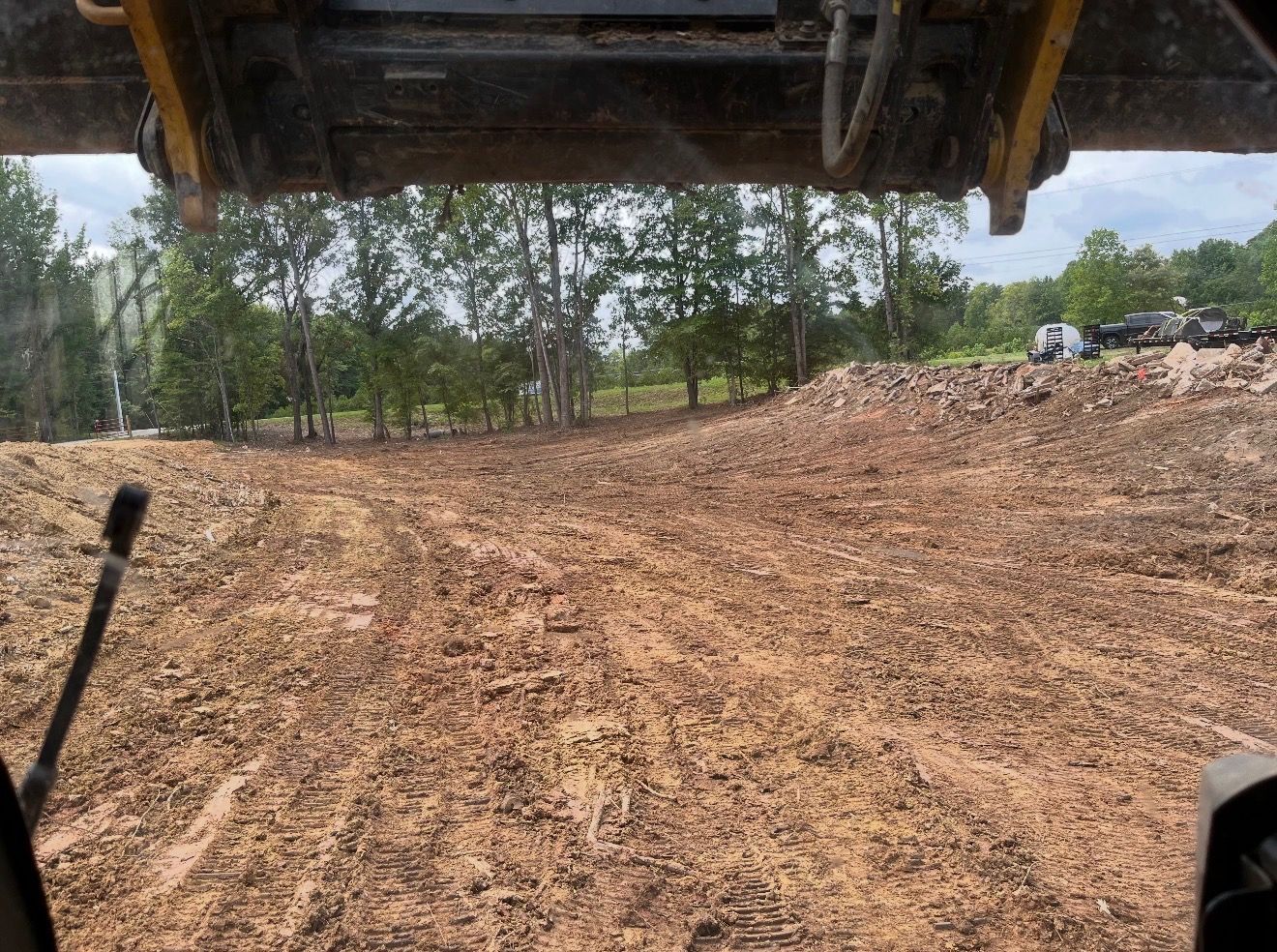
Building an access road that supports heavy equipment starts with excavation to remove unstable topsoil and organic material, followed by grading to establish slope and drainage flow. Base material is then placed in lifts and compacted using specialized equipment that increases density and load-bearing capacity. Each layer must reach a specific compaction level before the next is added, ensuring the road won't settle or shift under the weight of loaded trucks or tracked machinery.
Once construction is complete, you see a road surface that remains level and firm even after repeated passes by dump trucks, cranes, or utility equipment. Water drains off the surface rather than pooling or eroding the base, and tire tracks or equipment marks don't leave permanent ruts that worsen with each use. The road provides reliable access throughout all phases of your project, from initial site work through final equipment removal.
Total Land Management works with engineering firms and large contractors on commercial and industrial developments, handling projects that require extended equipment access and coordination with utility corridors or staging areas. The approach accounts for whether the road is temporary for construction access or permanent for ongoing site operations, adjusting material selection and compaction standards accordingly.
What Property Owners Usually Ask
Questions about access road construction often focus on soil conditions, routing, and how the road will perform under specific equipment loads.
What determines the routing for an access road on a commercial site?
Routing depends on existing topography, drainage patterns, connection points to public roads or staging areas, and the turning radius required for the largest equipment that will use the road. You avoid steep grades that create traction or drainage problems and route around natural features that would require excessive excavation.
How does red clay soil in the Reidsville area affect road construction?
Red clay absorbs moisture and becomes unstable when not properly compacted, requiring thorough base preparation and adequate compaction to prevent settling or rutting. The road base must be built in compacted lifts to maintain stability under heavy equipment traffic, especially during wet conditions common to the Piedmont region.
What's the difference between temporary and permanent access road construction?
Temporary roads use less base material and lighter compaction since they're only needed for the project duration, while permanent roads require deeper excavation, more substantial base layers, and higher compaction standards to support ongoing traffic. Permanent roads may also include surface treatments or additional drainage features for long-term stability.
How wide does an access road need to be for construction equipment?
Width depends on the equipment types and whether two-way traffic is required, but most construction access roads are built between twelve and sixteen feet wide to accommodate dump trucks, excavators on trailers, and utility vehicles with adequate clearance for safe passing.
What happens to temporary access roads after the project is complete?
Temporary roads can be removed and the area restored to original grade, left in place if the property owner wants continued access, or upgraded to permanent roads with additional base material and compaction. The decision depends on future site use and whether ongoing equipment or vehicle access is needed.
Total Land Management handles access road construction for solar farms, industrial sites, and commercial developments across the I-85 corridor, including Greensboro, High Point, and Winston-Salem. Arrange an on-site consultation to review terrain conditions and establish routing for your project.