
Energy Storage Sites Built for Equipment Loads
BESS Site Preparation in Reidsville for battery energy storage installations requiring clearing and equipment staging coordination
Renewable energy expansion drives demand for battery storage systems that stabilize grid capacity during peak demand periods, and sites must be cleared and graded to support the weight of battery containers, inverter equipment, and access infrastructure before installation crews arrive. Total Land Management prepares BESS locations across Reidsville and the Greensboro metro area by removing vegetation, establishing level equipment pads, and coordinating utility access routes with engineering teams managing electrical interconnections. Grid storage projects differ from standard commercial sites because battery arrays require precise drainage control to prevent water intrusion around electrical enclosures and access routes capable of supporting loaded equipment trailers during installation phases.
Site preparation removes trees, brush, and existing surface material across the footprint where battery containers and inverter systems will be positioned, then performs rough grading to create level pads that distribute equipment weight evenly and prevent settling that could misalign electrical connections. Staging areas are cleared adjacent to equipment zones so installation contractors have space to position cranes and store components during assembly without interfering with utility trenching work happening simultaneously across other site areas.
Arrange a site evaluation to assess clearing requirements and grading needs for your energy storage project.
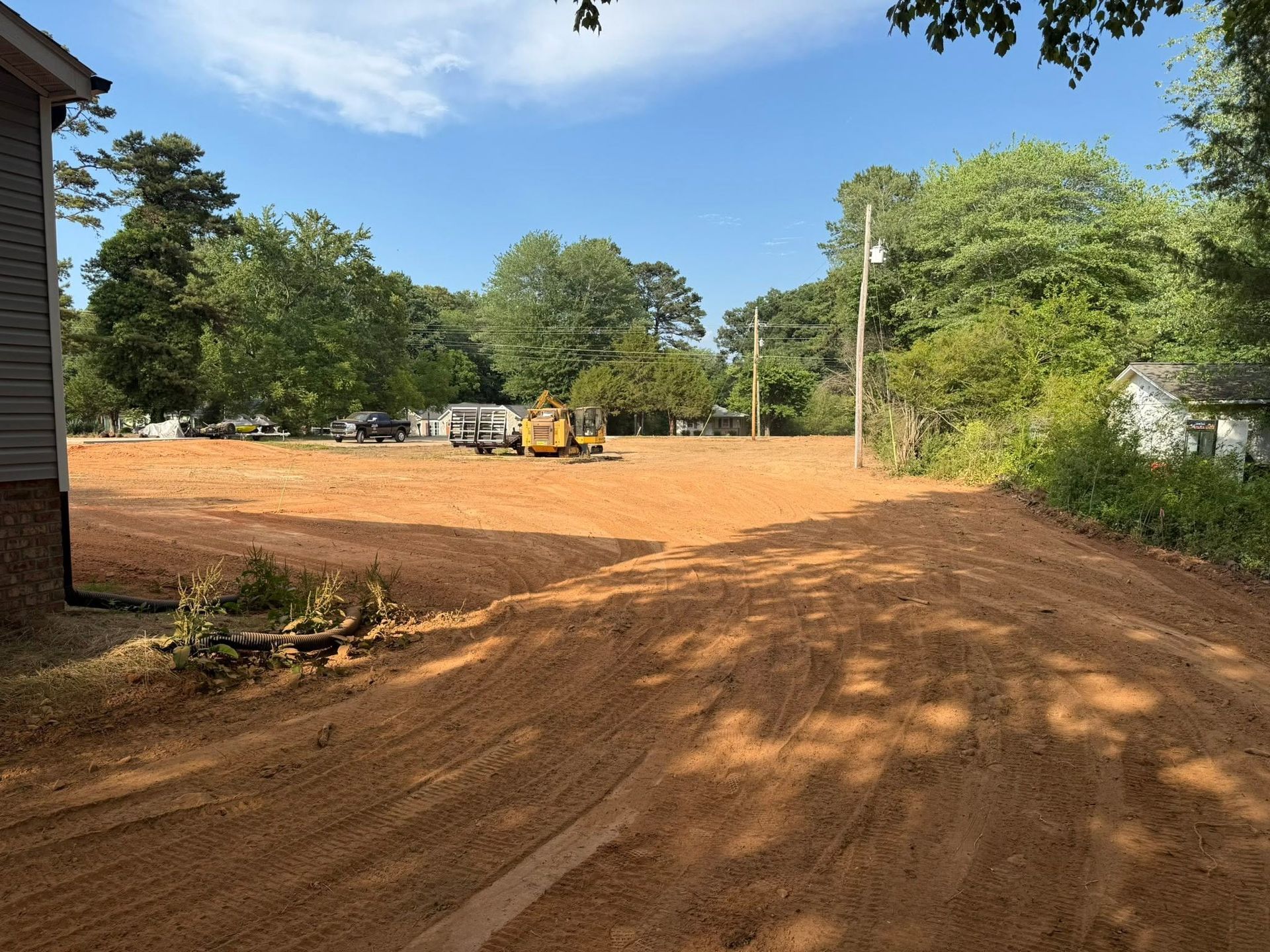
How BESS Sites Are Prepared Correctly
Your preparation work starts with vegetation removal across the entire project area, followed by rough grading that establishes equipment pads at elevations specified in civil engineering plans. Heavy equipment moves earth to create level surfaces where battery containers will sit, while perimeter areas are graded to direct stormwater runoff away from electrical enclosures and toward retention basins or drainage channels that prevent flooding during heavy rain events common in the Piedmont region.
After grading work is complete, you'll see defined equipment zones with stable surfaces that support the weight of loaded battery containers without sinking or shifting, access routes wide enough for delivery trucks and cranes to maneuver during installation, and utility corridors cleared to depths that allow trenching crews to install electrical conduit and fiber connections without disturbing finished grade elevations. The prepared site maintains positive drainage away from all equipment locations, preventing water from pooling near battery enclosures or inverter systems where moisture intrusion creates operational failures.
Site preparation coordinates with electrical engineers who specify equipment pad elevations and utility routing, and with utility contractors who need access corridors positioned to match their trenching schedules and interconnection timelines. BESS projects require faster turnaround than typical commercial development because energy storage systems often operate under regulatory deadlines or power purchase agreements with specific commissioning dates.
Answers Property Owners Usually Need
Battery storage projects involve specialized site requirements that differ from standard industrial development, and understanding preparation needs helps manage project timelines.
What makes BESS site prep different from other industrial clearing?
Battery storage systems require level equipment pads with precise drainage control because even minor water intrusion around electrical enclosures causes system shutdowns—grading work focuses on creating surface conditions that direct moisture away from equipment zones rather than simply clearing land for building construction.
How does soil type affect equipment pad stability?
Red clay soils in Reidsville and Rockingham County require compaction testing after grading to verify that surfaces can support battery container weight without settling—loose or improperly compacted areas allow equipment to shift over time and misalign electrical connections between battery units and inverter systems.
What utility coordination happens during site prep?
Preparation work establishes access corridors where electrical contractors will trench for high-voltage interconnections, fiber communication lines, and monitoring system cables—Total Land Management coordinates corridor locations with engineering firms to avoid conflicts between grading work and utility installation schedules.
When should site preparation begin relative to equipment delivery?
Clearing and grading need to be complete and stabilized before battery containers and inverter systems arrive on-site because heavy equipment cannot be positioned safely on unprepared ground—preparation typically occurs two to four weeks before installation contractors mobilize, depending on site size and soil conditions.
Why do staging areas matter for BESS installations?
Battery storage systems arrive in large containers transported by flatbed trucks and positioned using cranes—staging zones provide space where this equipment can operate without interfering with utility trenching work or driving over finished equipment pads and creating compaction issues that affect long-term stability.
Total Land Management handles site preparation for energy storage projects across the Triads region, managing clearing and grading work that supports battery system installation timelines. Contact our team to discuss your BESS project's site preparation scope and coordination requirements.